

News
Kanthal Coil Wholesale Supplier: What Determines Coil Price?

Industrial heating coils may look simple, but their price is influenced by far more than the length of resistance wire used to make them. Alloy grade, wire diameter, coil dimensions, electrical resistance, order quantity and testing requirements can all affect the final quotation.
When comparing a Kanthal coil wholesale supplier, buyers should look beyond the price per piece. Two coils that appear almost identical can have very different manufacturing costs if their materials, electrical tolerances or customised dimensions differ. This article focuses specifically on how each factor below moves the price.
1. Alloy Grade
The resistance alloy is one of the first factors affecting a coil's price. Kanthal® offers several FeCrAl alloys with different electrical and high-temperature properties, and higher-temperature-capable grades generally cost more per kilogram than standard grades.
Different grades are not automatically interchangeable, and a furnace designed around one alloy may require recalculation if another material is proposed. Quotations should identify the exact material rather than simply stating "high-temperature heating coil," since the material line item alone can shift the price meaningfully between quotes that otherwise look similar.
2. Amount of Wire Required
The quantity of resistance wire in each coil naturally influences material cost. A large furnace element using thick wire and a long-heated length requires more alloy than a small heating coil, so wire diameter, total conductor length and the number of coils in an assembly all influence the amount of material required.
As a result, comparing two coil prices without comparing their complete dimensions can be misleading; a lower price may simply reflect a shorter or thinner coil, not a better deal.
3. Wire Diameter's Effect on Manufacturing, Not Just Material
Wire diameter affects price in two separate ways. The more obvious one is material: a larger cross-section uses more alloy per metre. The less obvious one is manufacturing: very fine wire is generally slower and more delicate to draw, wind and terminate than mid-range diameters, which can add cost even when the total weight of alloy used is similar.
Buyers should avoid requesting a cheaper, thinner wire purely to reduce material cost unless the furnace design has actually been recalculated for it, since electrical performance changes along with the price.
4. Coil Diameter and Pitch
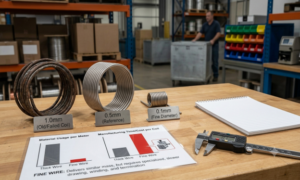
Coils must be formed to specific dimensions, including wire diameter, outside coil diameter, pitch, active heated length, overall stretched length and terminal length.
A standard coil geometry produced regularly requires less setup than an unusual geometry manufactured specifically for one furnace, which is one reason customised coils can cost more than standard production sizes even when they use a similar length of wire.
5. Resistance Tolerance
Some buyers only need approximate coil dimensions; others require each completed element to fall within a tightly controlled resistance range. Tighter tolerances require greater control of wire dimensions, conductor length and final electrical testing, which adds cost.
For industrial buyers, specifying only the tolerance actually required by the furnace can help avoid paying for unnecessary production precision.
6. Order Quantity
Wholesale quantity can influence unit price significantly. Producing one custom coil requires drawing review, machine setup, inspection and packaging; when hundreds of identical coils are ordered, some of those setup activities can be distributed across the larger batch.
Buyers should not select quantity purely to obtain a lower piece price, however. Large orders make sense when the coil design is already verified and future consumption is reasonably predictable; for a new supplier or new design, approving a small sample batch first can reduce risk.
7. Terminals and Custom Features
Not every heating coil is simply a continuous spiral. Some elements require extended cold ends, specialised terminals, welded connections, shaped sections or particular mounting arrangements, and each additional production step can affect labour, equipment time and inspection requirements.
A quotation should state clearly whether terminals and other finishing operations are included, since "coil price" and "installed element price" are not always the same line item.
8. Testing and Documentation
Industrial customers may require resistance measurements, dimensional inspection, alloy documentation or batch identification. These controls add value because they make incoming inspection and repeat purchasing easier, but they also add cost, since each additional test or record is a production step.
Buyers should tell the supplier which inspection records are actually required before requesting final pricing, rather than accepting a default, and sometimes inflated, documentation package.
9. Packaging and Shipping
The quoted coil price may not represent the complete delivered cost. Packaging must protect heating elements against deformation and transport damage, and international buyers should also compare freight, insurance, import costs and delivery terms when evaluating competing quotations.
A lower factory price can lose its advantage quickly once shipping or replacement costs are added; the delivered cost, not the unit price, is the number worth comparing.
Conclusion
The price of a heating coil is determined by a combination of material, engineering and production requirements: alloy grade, wire diameter, conductor length, coil geometry, resistance tolerance, order volume, terminals, testing and shipping all contribute to the final quotation.
When comparing a wholesale supplier, send the same detailed specification to every company and compare like with like. The lowest unit price is only meaningful when the coils being quoted have the same alloy, dimensions, resistance and quality requirements behind it.