

News
26
November 2015
Suitable materials for pressure vessels

Preface
The pressure vessel design includes a variety of stresses- longitudinal and hoop stresses are developed by internal pressure, different bending stresses caused by bending moment, wind loads and seismic loads, compressive and tensile stresses because of dead weight of platform and vessel contents, peak stress by irregularities particularly in localized regions and stresses by thermal gradient. Hence a designer needs to consider the entire probable loads and moments on a pressure vessel.
The allowable pressure that is based on service temperature, lowest tensile strength of the flange material and bolt material are considered following the design stress. The thermal stresses are crucial for pressure vessel designing.
Stress in pressure vessels
A pressure vessel is categorized as thin, if ratio of mean radium and wall thickness is above 10. Stresses produced in thin pressure vessels because of internal pressure are called as membrane stresses. A designer needs to design a pressure vessel by also considering the failure factors. The stress theory states the failure in brittle materials however it is not precise always particularly for ductile alloys.
Traditionally cast iron was utilized for a pressure vessel however modern vessel codes demand using ductile materials. At the cryogenic limits up to -250oC, stainless steel grades are used, at normal temperature limits up to 400oC, carbon steels are employed and for temperature limits ranging from 600oC to 900oC or above this limit, stainless steel grades are used. Often Inconel grades are used in the production of pressure vessels.
The peak stresses at irregularities result in fatigue condition because of stress escalation in high and localized regions. These stresses causes fatigue failures. Various stresses paired with fatigue loads and because of seismic shock loads, intense safety protocols are followed by designers while prototyping the pressure vessel. Non-damaging inspection of pressure vessels exposed to large internal pressures, wind loads and seismic stresses are principle attributes to find the internal flaws in the vessel material. The non-damaging methods are used that involve radiography, ultrasonic and liquid penetrant and magnetic particle technique. In these, radiography is a precise and consistent method. It should be remembered that additional membrane stresses are resulted by internal pressure, the extensive localized stresses are resulted by irregularities and bending stresses resulted by wind pressure. However these are permitted with incorporation of extreme safety.
The key factors are included in the selection of construction materials for pressure vessels to avoid damage during the service. This post describes the essential design factors, common materials and properties of these materials.
Design attributes
Service temperature and pressure, application condition, cost, design life, reliability and safety.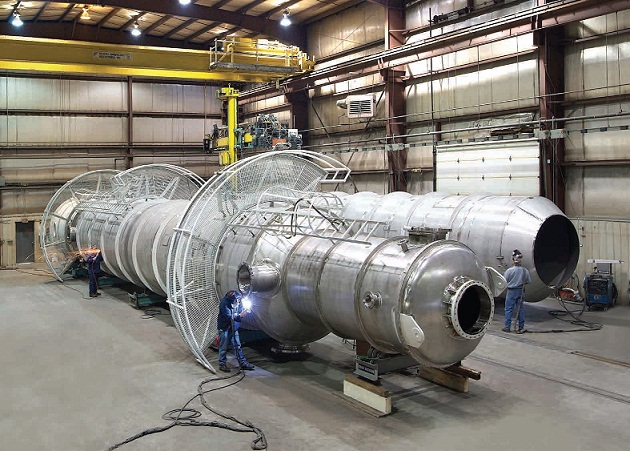 Service temperature and pressure limit the material selection widely influence the corrosion rates, The influences of service temperature limits is analyzed through severely decreased strength, metallurgy and corrosion resistance characteristic. For example, carbon steel can serve up to 800oF. Above this limit, the strength of carbon steel reduces considerably and carbon steel may be embrittled by graphitization.
Corrosion rates rapidly increase with increase in temperature. For instance, carbon steel offers service up to 550oF when directly subjected to sour conditions without any security, the corrosion rates increase at higher temperatures.
Influence of service pressure- Affects the material’s stability in the service condition such as hydrogen attack of steels in the high pressure and elevated temperature H2S service.
Service conditions – before subjecting for use, the considered factors are vessel materials, temperature and pressure, contaminants, physical state and flow rate.
The material selection for pressure vessels is based on the corrosion rate and other severe damaging mechanisms that include stress corrosion cracking and hydrogen embrittlement.
The corrosion rate data helps in determining whether the chosen material was appropriate by expected corrosion and lab tests. Get advice from the material manufacturer for special recommendations.
Price- Purpose is to choose an economical and reliable material that can operate longer within the minimum cost. If stainless steel or other high alloyed material is desired, carbon or low alloy steel clad is used with a thick electrodepositing of high alloy material. Clad plate is economical for vessel thickness below ½ inch. It is also sensitive to produce the corrosion cracking as compare to rigid alloy. The commonly used cladding materials are not practical to produce solid wall construction due to difficulty in producing reliable welds.
Possibility and result of failure should be taken into account. The failure cases are determined from the material experience in the past experiments and shutdown frequency.
Typical pressure vessel material application standards
Carbon steel
Easily available and producible. Affordable material selection with 1/8 – ¼ inch corrosion allowance. Small iron content with 1% manganese and 0.35 % carbon. Larger carbon content reduces weldability. But carbon steels are sensitive to brittle fracture at standard ambient temperatures. Carbon steel is corroded by hydrogen attack at the high temperatures in high pressure hydrogen. Production of graphite, specifically in weld heat affected regions from decomposition of iron carbides. Graphitized steel cannot withstand even small pressure or loads. Welded carbon steel can serve below 800oF.
Welded or cold process carbon steel is also prone to stress corrosion cracking in caustic, nitrate, carbonate, amine solutions and in anhydrous ammonia. Stress relief is needed to prevent damages.
High strength steel in aqueous solutions of hydrogen sulfide (H2S) cause rapid non-ductile damages. Monitoring highest strength and hardness is required to avoid damage. Post weld heat processing also helps in preventing cracking.
Hydrogen Induced Cracking- Low strength carbon steels are sensitive to hydrogen induced cracking in wet solutions of H2S. For example blistering. Post-weld heat processing is helpful to secure carbon steel from such cracking. Such steels are not commonly used.
Stainless steel
Steel types made of iron and chromium containing minimum 12% chromium and bal. nickel come in the stainless steel 300 series. For example stainless steel 304. Molybdenum, titanium and columbium are included for special objectives. The stainless steels are categorized on the base of their microstructure such as Austenitic and Ferritic.
Duplex stainless steels offer enhanced resistance to chloride induced stress corrosion cracking. This attack can be prevented as-
Service temperature and pressure limit the material selection widely influence the corrosion rates, The influences of service temperature limits is analyzed through severely decreased strength, metallurgy and corrosion resistance characteristic. For example, carbon steel can serve up to 800oF. Above this limit, the strength of carbon steel reduces considerably and carbon steel may be embrittled by graphitization.
Corrosion rates rapidly increase with increase in temperature. For instance, carbon steel offers service up to 550oF when directly subjected to sour conditions without any security, the corrosion rates increase at higher temperatures.
Influence of service pressure- Affects the material’s stability in the service condition such as hydrogen attack of steels in the high pressure and elevated temperature H2S service.
Service conditions – before subjecting for use, the considered factors are vessel materials, temperature and pressure, contaminants, physical state and flow rate.
The material selection for pressure vessels is based on the corrosion rate and other severe damaging mechanisms that include stress corrosion cracking and hydrogen embrittlement.
The corrosion rate data helps in determining whether the chosen material was appropriate by expected corrosion and lab tests. Get advice from the material manufacturer for special recommendations.
Price- Purpose is to choose an economical and reliable material that can operate longer within the minimum cost. If stainless steel or other high alloyed material is desired, carbon or low alloy steel clad is used with a thick electrodepositing of high alloy material. Clad plate is economical for vessel thickness below ½ inch. It is also sensitive to produce the corrosion cracking as compare to rigid alloy. The commonly used cladding materials are not practical to produce solid wall construction due to difficulty in producing reliable welds.
Possibility and result of failure should be taken into account. The failure cases are determined from the material experience in the past experiments and shutdown frequency.
Typical pressure vessel material application standards
Carbon steel
Easily available and producible. Affordable material selection with 1/8 – ¼ inch corrosion allowance. Small iron content with 1% manganese and 0.35 % carbon. Larger carbon content reduces weldability. But carbon steels are sensitive to brittle fracture at standard ambient temperatures. Carbon steel is corroded by hydrogen attack at the high temperatures in high pressure hydrogen. Production of graphite, specifically in weld heat affected regions from decomposition of iron carbides. Graphitized steel cannot withstand even small pressure or loads. Welded carbon steel can serve below 800oF.
Welded or cold process carbon steel is also prone to stress corrosion cracking in caustic, nitrate, carbonate, amine solutions and in anhydrous ammonia. Stress relief is needed to prevent damages.
High strength steel in aqueous solutions of hydrogen sulfide (H2S) cause rapid non-ductile damages. Monitoring highest strength and hardness is required to avoid damage. Post weld heat processing also helps in preventing cracking.
Hydrogen Induced Cracking- Low strength carbon steels are sensitive to hydrogen induced cracking in wet solutions of H2S. For example blistering. Post-weld heat processing is helpful to secure carbon steel from such cracking. Such steels are not commonly used.
Stainless steel
Steel types made of iron and chromium containing minimum 12% chromium and bal. nickel come in the stainless steel 300 series. For example stainless steel 304. Molybdenum, titanium and columbium are included for special objectives. The stainless steels are categorized on the base of their microstructure such as Austenitic and Ferritic.
Duplex stainless steels offer enhanced resistance to chloride induced stress corrosion cracking. This attack can be prevented as-
According to AD specifications base metals and filter metals should be individually validated for the production of pressure vessels to withstand various thermal shocks and formed from nickel alloys that keep their mechanical characteristics at the high temperatures. Inconel alloy 718 was discovered, unlike to the experience received by sheet metal producers, could not be subjected for use in the age hardened conditions due to the development of brittle lave phases in the weld metal. The experience received with non-age hardening alloy 625 was satisfactory, but as it was discovered that alloy 625 can be employed with complications for producing the shell. An experience is earned with TIG and on conditions under which alloys such as Inconel 625 and 718 are welded.
Heanjia Super-Metals is specialized in the production of essential materials such as Inconel, Monel, Hastelloy and carbon & stainless steel and other materials for the production of custom tanks and pressure vessels for the industrial and commercial units. The industrial facility is capable to manage intensive fabrication of alloys that are used in the production of heavy duty vessels up to 60 tons, 110 ft and 10 ft in diameter. The alloys are chemical and corrosion resistant materials that offer prolong performance.
Service temperature and pressure limit the material selection widely influence the corrosion rates, The influences of service temperature limits is analyzed through severely decreased strength, metallurgy and corrosion resistance characteristic. For example, carbon steel can serve up to 800oF. Above this limit, the strength of carbon steel reduces considerably and carbon steel may be embrittled by graphitization.
Corrosion rates rapidly increase with increase in temperature. For instance, carbon steel offers service up to 550oF when directly subjected to sour conditions without any security, the corrosion rates increase at higher temperatures.
Influence of service pressure- Affects the material’s stability in the service condition such as hydrogen attack of steels in the high pressure and elevated temperature H2S service.
Service conditions – before subjecting for use, the considered factors are vessel materials, temperature and pressure, contaminants, physical state and flow rate.
The material selection for pressure vessels is based on the corrosion rate and other severe damaging mechanisms that include stress corrosion cracking and hydrogen embrittlement.
The corrosion rate data helps in determining whether the chosen material was appropriate by expected corrosion and lab tests. Get advice from the material manufacturer for special recommendations.
Price- Purpose is to choose an economical and reliable material that can operate longer within the minimum cost. If stainless steel or other high alloyed material is desired, carbon or low alloy steel clad is used with a thick electrodepositing of high alloy material. Clad plate is economical for vessel thickness below ½ inch. It is also sensitive to produce the corrosion cracking as compare to rigid alloy. The commonly used cladding materials are not practical to produce solid wall construction due to difficulty in producing reliable welds.
Possibility and result of failure should be taken into account. The failure cases are determined from the material experience in the past experiments and shutdown frequency.
Typical pressure vessel material application standards
Carbon steel
Easily available and producible. Affordable material selection with 1/8 – ¼ inch corrosion allowance. Small iron content with 1% manganese and 0.35 % carbon. Larger carbon content reduces weldability. But carbon steels are sensitive to brittle fracture at standard ambient temperatures. Carbon steel is corroded by hydrogen attack at the high temperatures in high pressure hydrogen. Production of graphite, specifically in weld heat affected regions from decomposition of iron carbides. Graphitized steel cannot withstand even small pressure or loads. Welded carbon steel can serve below 800oF.
Welded or cold process carbon steel is also prone to stress corrosion cracking in caustic, nitrate, carbonate, amine solutions and in anhydrous ammonia. Stress relief is needed to prevent damages.
High strength steel in aqueous solutions of hydrogen sulfide (H2S) cause rapid non-ductile damages. Monitoring highest strength and hardness is required to avoid damage. Post weld heat processing also helps in preventing cracking.
Hydrogen Induced Cracking- Low strength carbon steels are sensitive to hydrogen induced cracking in wet solutions of H2S. For example blistering. Post-weld heat processing is helpful to secure carbon steel from such cracking. Such steels are not commonly used.
Stainless steel
Steel types made of iron and chromium containing minimum 12% chromium and bal. nickel come in the stainless steel 300 series. For example stainless steel 304. Molybdenum, titanium and columbium are included for special objectives. The stainless steels are categorized on the base of their microstructure such as Austenitic and Ferritic.
Duplex stainless steels offer enhanced resistance to chloride induced stress corrosion cracking. This attack can be prevented as-
- Avoid choosing rigid wall austenitic stainless steel for warm and aqueous chloride services such as when need stainless steel, clad steel is preferred.
- Stress relieved vessels produced of solid austenitic stainless steel where alternative is not available.
| Carbon steel | C-1/2 Molybdenum | 1 ½ Chromium-1 Molybdenum | 2 ¼ Chromium-1 Molybdenum | 12 Chromium | 18chromium – 8Nickel (Grade 304) | |
| Strength, 3000 psi | 990 oF | 1075 oF | 1135 oF | 1150 oF | 1100 oF | 1275 oF |
| Oxidation (10 mpy loss) | 1025 oF | 1025 oF | 1050 oF | 1100 oF | 1350 oF | 1600 oF |
| Graphitization (welded) | 800 oF | 850 oF | Not applicable | Not applicable | Not applicable | Not applicable |
| 885 embrittlement | N/C | Not applicable | Not applicable | Not applicable | 775 to 950 oF | Not applicable |
| Sigma embrittlement | Not applicable | Not applicable | Not applicable | Not applicable | Not applicable | 1100 – 1700 oF |
| Hardening on cooling | 1330 oF | 1330 oF | 1375 oF | 1425 oF | 1450 oF | Not applicable |
| Carbide precipitation | Not applicable | Not applicable | Not applicable | Not applicable | Not applicable | 850 to 1550 oF |
| Hydrogen attack H2pp (750 psi) | 500 oF | 500 oF | 1000 oF | 1100 oF | Not applicable | Not applicable |
| Caustic stress corrosion cracking | 140 oF | 140 oF | 140 oF | 140 oF | 140 oF | 140 oF |
| Chloride stress corrosion cracking | Not applicable | Not applicable | Not applicable | Not applicable | Not applicable | 140 oF |
| Sulfide stress cracking | Sensitive if yield strength is above 90 ksi | Sensitive if yield strength is above 90 ksi | Sensitive if yield strength is above 90 ksi | Sensitive if yield strength is above 90 ksi | Sensitive if yield strength is above 90 ksi | Not applicable |